Mice, rats, squirrels, and voles can chew through a garden fast, but you can cut the damage dramatically by combining smart landscape maintenance, well-placed fencing, and careful protection of your beds, bulbs, and trees. This guide walks you through how to keep mice out of your garden and lawn while building a more wildlife-resistant landscape. It won’t guarantee a rodent-free yard, but it gives you a practical, long-term plan that holds up through wet Southern Oregon springs and dry summers.
Why These Pests Matter
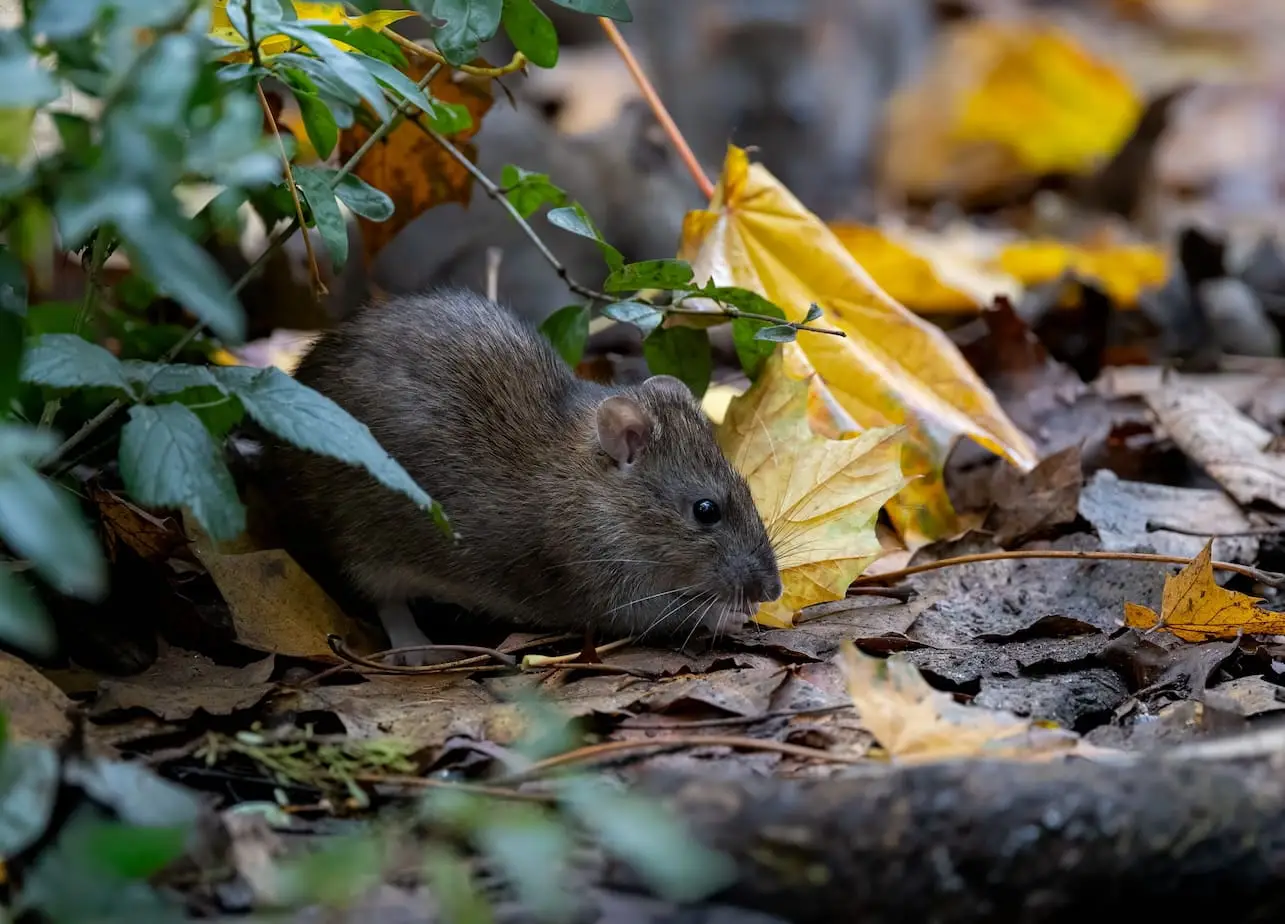
Mice, rats, squirrels, and voles damage vegetable gardens, lawns, fruit trees, irrigation lines, bulbs, and ornamental plants. Voles and mice chew roots and bark, squirrels strip crops and dig up bulbs, and rats gnaw containers, compost, and structures. No single spray or scent solves everything — the most reliable approach combines identifying the pest, removing food and shelter, installing barriers, and keeping up with regular garden maintenance.
Homes near wooded areas, fields, orchards, creeks, or undeveloped land around Grants Pass see the most wildlife pressure. If your property backs up to any of these, expect steady activity and plan your defenses accordingly.
Identify What Is Damaging Your Garden
Correctly identifying the animal keeps you from wasting time on fencing or deterrents that don’t fit the problem. Similar-looking damage — dug bulbs, gnawed bark, or bare soil — can come from different species, so look closely at droppings, tunnels, and feeding signs before you act.
Common Signs of Mice, Rats, Squirrels, and Voles
- Mice: Small droppings, damaged seedlings, missing seeds, and gnawed produce, often near sheds or storage with nesting material like paper or fabric.
- Rats: Larger droppings, burrows, well-used paths along fences or walls, gnawed containers, and activity around compost or garbage.
- Squirrels: Dug-up bulbs, disturbed containers, missing fruit, damaged bird feeders, and bite marks on vegetables.
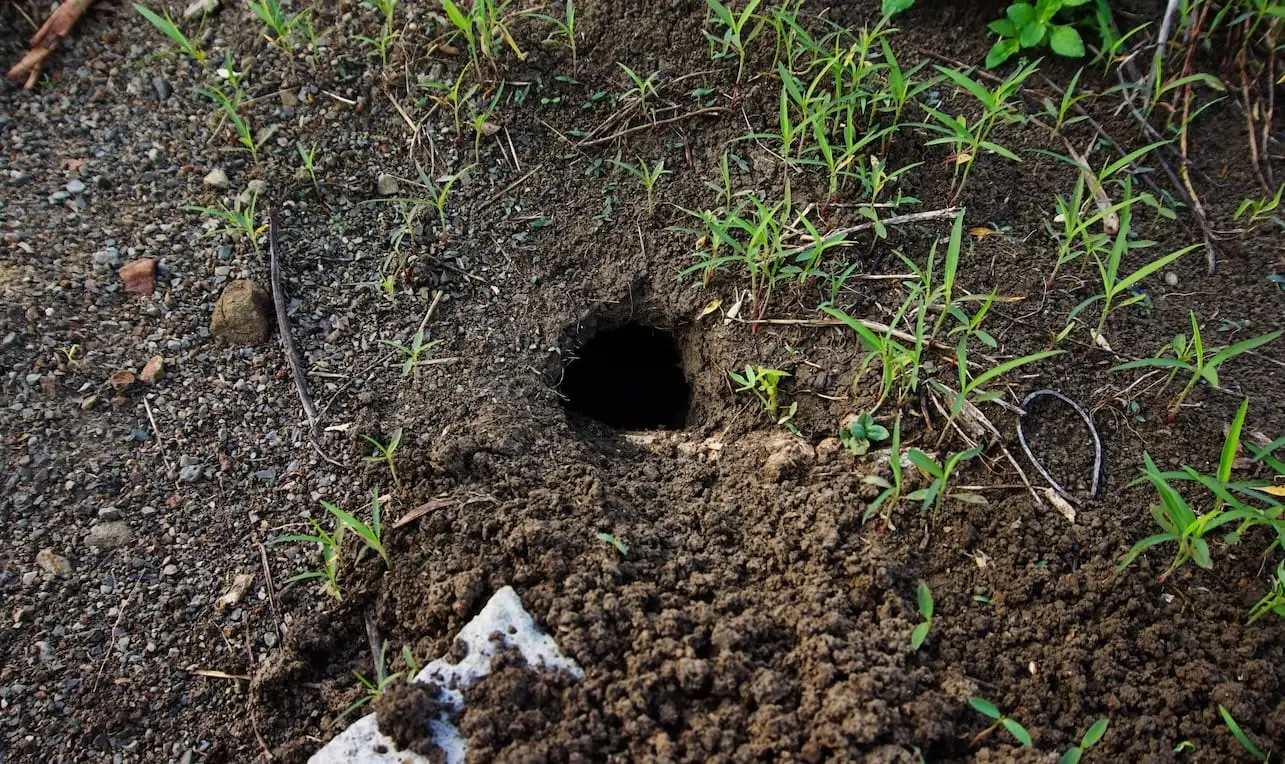
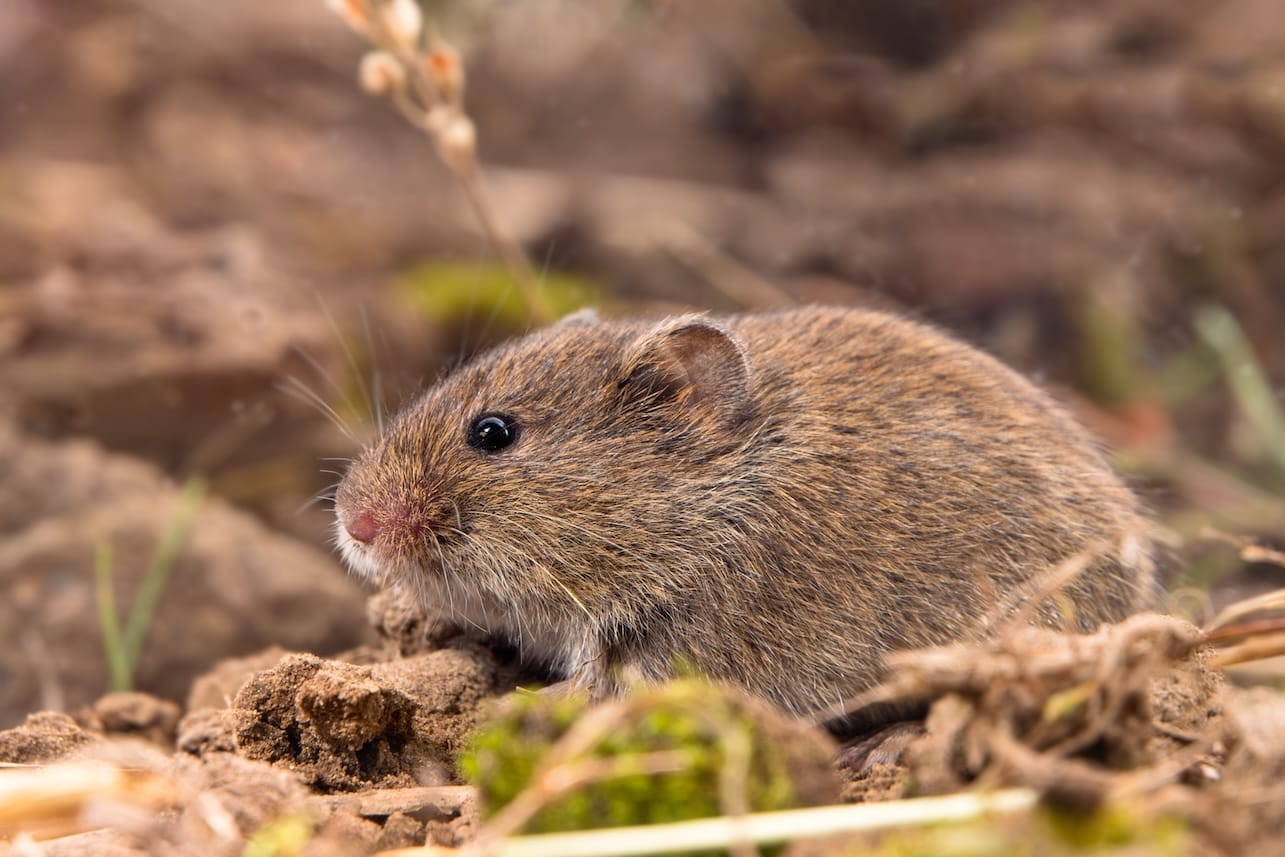
- Voles: Shallow surface runways hidden under grass, small burrow openings, damaged roots, uneven lawn, and gnawed bark near the base of trees.
Voles are frequently confused with mice, moles, and gophers, but their grass-covered runways and root or bark damage are the key clues. Use the table below as a quick reference.
Pest Identification Guide
| Animal | Common signs | Typical damage | Likely hiding places |
| Mice | Small droppings, fine gnaw marks | Seeds, seedlings, stored materials | Sheds, cluttered storage, debris piles |
| Rats | Burrows, tracks, larger droppings | Produce, containers, structures | Compost, woodpiles, dense shrubs |
| Squirrels | Digging, missing produce, feeder damage | Bulbs, fruit, vegetables | Trees, fences, nearby structures |
| Voles | Surface runways, small openings | Roots, lawns, tree bark | Grass, mulch, groundcover |
Why Rodents and Squirrels Are Attracted to Gardens
Most rodent and squirrel problems start because your garden offers food, water, and shelter in one place. Common rat attractants around Oregon homes include birdseed, pet or chicken feed, kitchen scraps, dropped fruit, and unsecured garbage.3 Add leaking irrigation, dripping faucets, pet bowls, and standing water, plus dense shrubs, tall grass, ivy, heavy mulch, woodpiles, and clutter for shelter, and wildlife has every reason to stay.
Use Landscaping to Make Your Yard Less Inviting
A rodent-resistant garden starts with habitat changes. Your landscape layout and maintenance are usually the most effective long-term deterrents, since they remove the reasons animals show up.
Reduce Cover and Hiding Places
- Thin dense shrubs and overgrown groundcover so you can see the soil surface — dense vegetation gives rats protected places to hide.
- Trim grass and weeds along fence lines so rodents can’t move unseen.
- Remove unused pots, boards, cardboard, branches, and debris that provide nesting sites.
- Stack firewood neatly and elevate it away from buildings; raised, organized woodpiles are far less attractive to rodents.2
- Keep mulch from piling deeply against trunks and foundations — heavy mulch and vegetative cover give voles both food and protection from predators.1
Remove Easy Food and Water Sources
- Pick up fallen fruit and harvest vegetables and berries promptly.
- Clean spilled birdseed and move feeders away from structures if they draw rodents.
- Store pet food, chicken feed, grass seed, and birdseed in tightly sealed containers rather than open bins.
- Use a contained compost system instead of an open food-scrap pile.3
- Repair leaking faucets, hoses, and irrigation lines and empty containers that hold standing water.
Install Fencing and Physical Garden Barriers
Physical barriers — fencing, hardware cloth, and cages — are usually more dependable than scent-based products, especially around your most valuable beds and plants.
Barrier Options for Garden Beds and Plants
- Line new raised beds with galvanized hardware cloth (¼-inch openings) to stop burrowing — use hardware cloth, not chicken wire, for rodents.
- Extend garden fencing a few inches below the soil to discourage digging, and check for washouts after heavy rains.
- Add wire cages over vulnerable vegetables, berries, flowers, and newly planted bulbs.2
- Protect young trees with trunk guards or buried hardware-cloth cylinders to stop girdling.
- Inspect barriers for gaps, digging, corrosion, or plant growth pushing against the fence.
For voles, small-mesh fencing at least 12 inches high with the bottom edge buried 2–3 inches helps keep them out.1 Well-built wire cages are an effective, low-risk way to protect plants from squirrels.2
Barrier Comparison Guide
| Barrier | Best used for | Advantages | Maintenance focus |
| Hardware cloth under beds | Mice, voles | Long-lasting, protects roots | Inspect when soil is replaced |
| Buried perimeter fencing | Rats, voles | Limits digging | Check for gaps, washouts |
| Wire garden cages | Squirrels, larger rodents | Protects produce directly | Keep doors, seams closed |
| Tree trunk guards | Voles, mice | Protects young bark | Adjust as trees grow |
| Row covers | Seeds, seedlings | Easy seasonal protection | Secure edges after wind |
How to Keep Mice Out of the Garden
To keep mice out of your garden, focus on removing small hiding spots and easy food near your beds. Because mice move freely between beds, sheds, crawl spaces, and garages, any plan needs to address structures as well as the yard.
- Clean up spilled seed and fallen produce so mice don’t learn to forage there.
- Remove straw, paper, fabric, and cardboard that could become nesting material.
- Keep sheds organized and store seed, pet food, and supplies in sealed bins or metal cans.
- Seal gaps larger than about ¼ inch around shed doors, vents, pipes, and foundations with metal or mortar.3
- Protect new seeds and seedlings with mesh row covers, and inspect compost for tunneling.
Rat Deterrent Strategies for Yards and Gardens
The most effective rat deterrent is a combination of sanitation, habitat reduction, and exclusion — not a single spray or scent. Long-term prevention that reduces food, shelter, and building access works far better than reacting after rats are already established.3
- Remove fallen fruit and uneaten pet food daily so rats can’t rely on easy meals.
- Clean beneath bird feeders and move them away from fences, rooflines, or eaves.
- Thin vegetation and prune shrubs that conceal rat movement along walls and foundations.
- Secure garbage and compost with tight-fitting lids and keep food scraps out of open piles.
- Seal gaps and screen feed areas around sheds, crawl spaces, vents, coops, and outbuildings with small-opening hardware cloth, burying the base several inches.3>
- Continue prevention even after activity appears to stop, since populations rebound when control efforts relax.
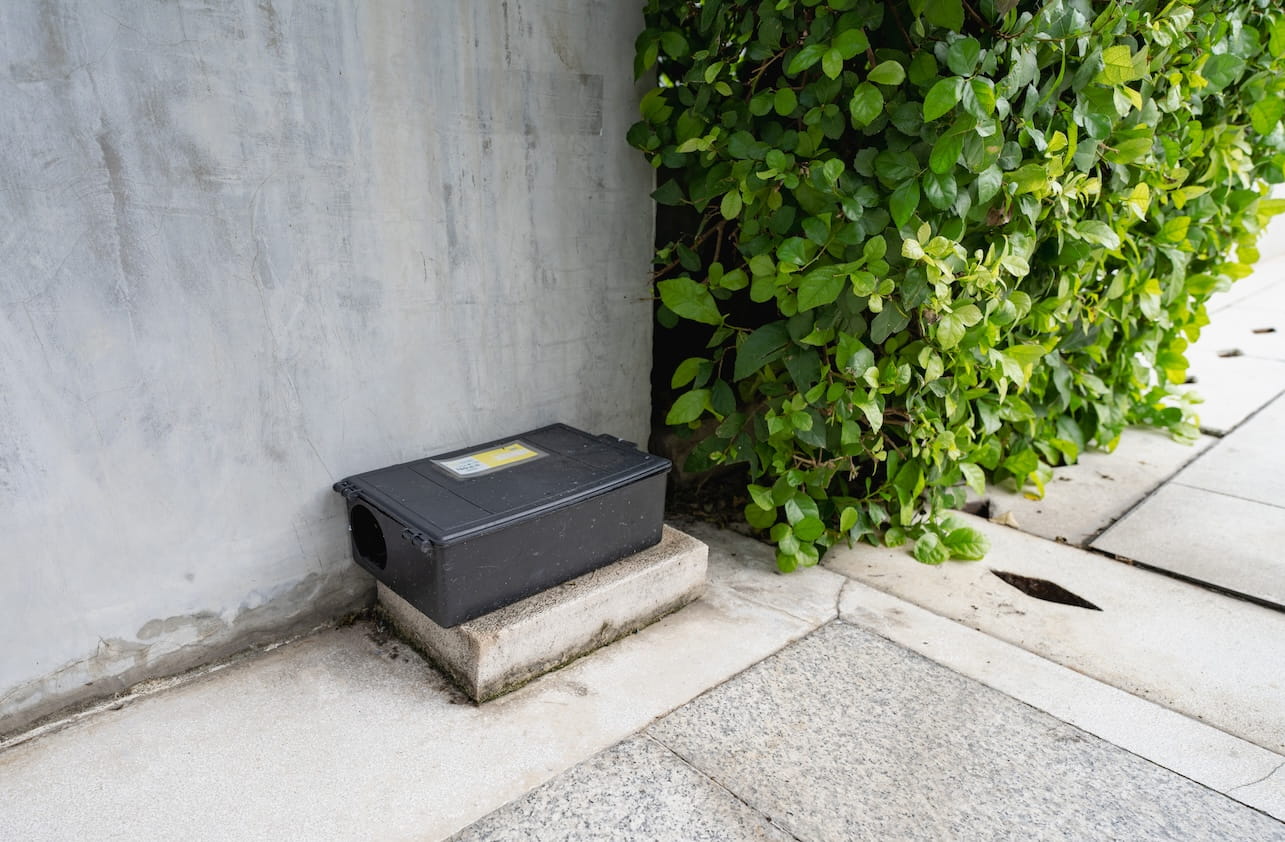
A caution on poison: Rodenticides can harm pets and non-target wildlife through direct and secondary exposure, and they must be used strictly according to their labels.4 Persistent or widespread rat activity around buildings may call for a licensed pest-control provider to handle trapping or regulated baiting.
How to Protect Plants From Squirrels
Squirrels are nearly impossible to exclude from a whole property, so focus on your highest-value plants and crops. Wire plant cages are rated an effective, low-risk squirrel-control method for gardens and fruit trees.4
- Use tightly built wire cages over vegetables, berries, and flowers, with no gaps at panels or seams.
- Cover newly planted bulbs and container gardens with mesh until soil settles and roots establish.
- Pick ripe fruit and vegetables promptly, before squirrels find them.
- Remove or modify bird feeders that repeatedly attract squirrels.4
- Trim branches and remove vines that serve as climbing routes to roofs.
Managing Voles in Southern Oregon Landscapes
Managing voles in Southern Oregon takes a mix of habitat reduction and plant protection, especially on properties with lawns, orchards, thick groundcover, or dense vegetation. Voles can be serious pests of gardens, crops, and orchards, particularly when populations spike.1
Reduce Vole Habitat and Protect Valuable Plants
- Mow grass and control weeds around gardens and young trees to expose vole runways.
- Thin heavy groundcover and keep deep mulch off trunks; maintain a vegetation-free ring around young trees.
- Install small-mesh fencing at least 12 inches high around vulnerable beds, buried 2–3 inches.1
- Use trunk guards or hardware-cloth cylinders to prevent bark girdling.
- Check beneath grass and mulch for runways and burrow openings, especially where lawns feel uneven.
- Watch for plants that wilt or feel loose in the ground, a sign of root or bulb feeding.
Voles feed on roots, bulbs, stems, crops, and bark. Dense vegetation and heavy mulch make a site more attractive, while mowing and reducing cover make their activity easier to spot.
Voles, Moles, or Gophers?
- Voles: Often create narrow surface runways under grass, small openings, and bark or root damage near the surface.
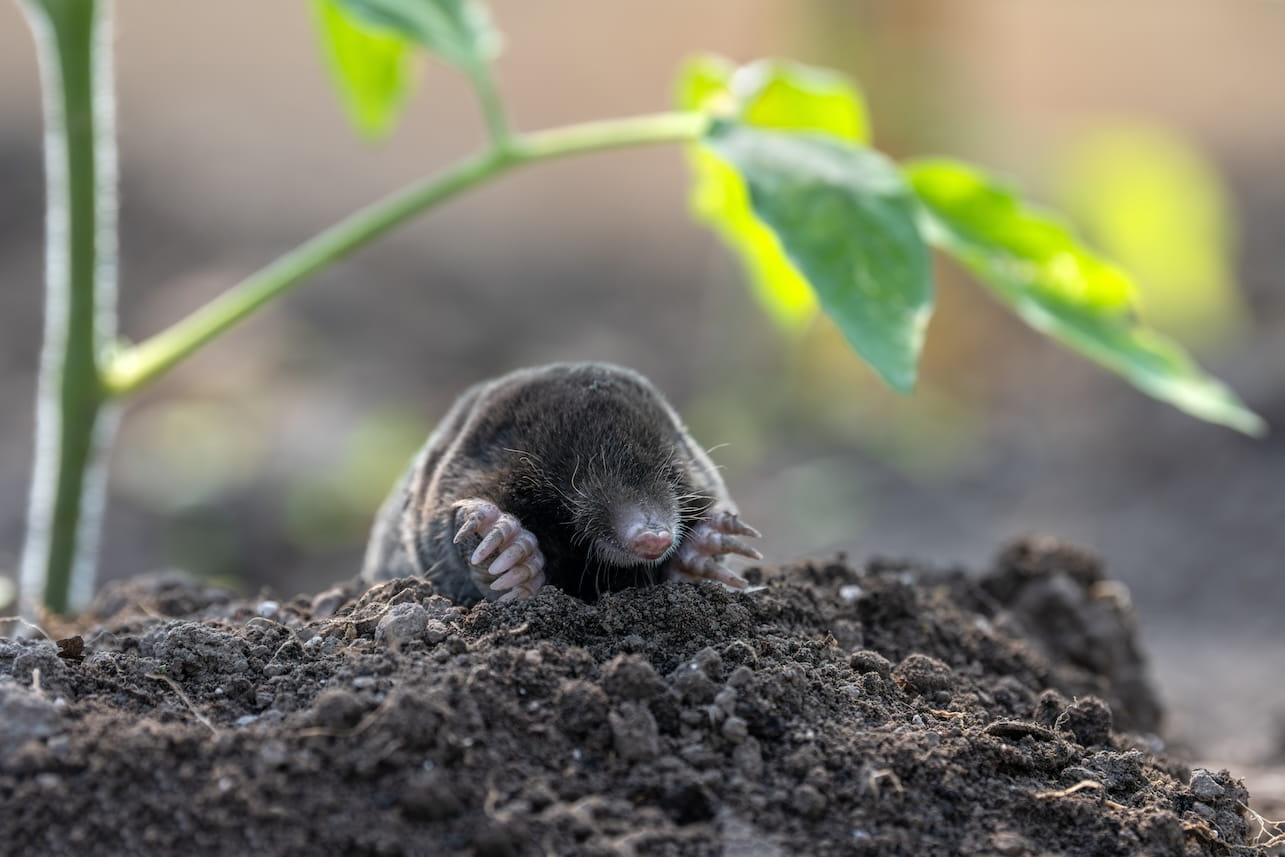
- Moles: Look for raised tunnels and mounds. They feed mainly on insects and earthworms rather than plants.
- Gophers: Noticeable soil mounds and extensive underground damage are the signs to look for. You will often need various barrier types to keep them out.
Do Natural Wildlife Deterrents Work?
Natural deterrents can play a supporting role, but they rarely replace fencing and habitat changes. Scent-based products may offer temporary relief, yet rain, sunlight, and irrigation shorten their effect and animals often get used to them. Commercial repellents and ultrasonic devices have not proven reliable for vole control, and bait can cause secondary poisoning in predators that eat poisoned voles.1 Some squirrel repellents may be temporarily effective but generally need frequent reapplication.
Use these cautiously and only as additions to your main strategy:
- Plant-oil repellents (peppermint, garlic, or castor), applied per label directions.
- Predator-scent products around specific beds where digging is a problem.
- Motion-activated sprinklers or lights that startle animals at night.
- Owl boxes or predator habitats, which can help but won’t guarantee a rodent-free garden.
Seasonal Maintenance to Prevent Future Damage
Consistent seasonal upkeep is one of the best ways to keep rodents out over time.
Seasonal Prevention Checklist
<tbody
| Season | Key tasks |
| Springtime | Inspect beds, hardware cloth, and fencing; repair irrigation and barriers; cut back weeds; protect seedlings and young trees. |
| Summer | Harvest often; clear fallen fruit and spilled birdseed; fix irrigation leaks; watch for digging, droppings, and runways. |
| Autumn | Clear dead plants and debris; secure stored seed and feed; inspect sheds and vents; install trunk guards. |
| Winter | Check tree bases for bark damage; trim vegetation near structures; inspect stored supplies; keep up prevention. |
When to Contact a Professional
A professional landscaping company can address the conditions that make a property attractive to wildlife, while pest-control professionals handle regulated trapping and structural infestations.
Consider calling a professional when:
- Damage continues after cleanup, fencing, and barrier installation.
- Rodents are entering the house, garage, shed, or crawl space.
- Young trees are being girdled or lawns show extensive vole damage.
- Burrows appear near foundations, patios, or hardscaping.
- Irrigation systems or wiring are being gnawed.
- The animal responsible can’t be confidently identified, or multiple species are present.
- Trapping or regulated wildlife removal may be necessary under Oregon rules.
A landscaping company like M & B Landscaping can prune vegetation, clear debris, repair sprinklers and irrigation, improve garden borders, install hardware cloth and fencing, and other garden bed design and installation. A licensed pest-control or wildlife professional may still be needed for structural infestations, regulated trapping, baiting, or legally restricted animal removal.
Build a More Wildlife-Resistant Landscape With M & B Landscaping
The most reliable approach comes down to four steps: remove food and water, reduce dense cover and clutter, protect beds and trees with barriers, and maintain fencing, irrigation, and storage all year. M & B Landscaping can help you:
- Prune overgrowth and clear the debris that shelters rodents
- Install hardware cloth, fencing, and raised-bed barriers
- Repair irrigation leaks that draw wildlife
- Redesign vulnerable beds and borders for easier upkeep
Bottom line: you can’t guarantee a rodent-free yard, but the right landscape design and maintenance make your property far less inviting to mice, rats, squirrels, and voles.
Tired of finding damaged plants, shallow tunnels, gnawed bark, or rodent activity around your yard? Contact our Grants Pass landscaping team to talk through wildlife-resistant landscaping options for your property in Grants Pass and surrounding Southern Oregon communities.
Sources
- Northwest Center for Alternatives to Pesticides. “5 Tips to Naturally Control Voles.” https://www.pesticide.org/voles (accessed July 10, 2026).
- Ehrlich Pest Control. “How to Keep Rodents Out of Your Garden or Yard.” https://www.jcehrlich.com/pest-insights/rodents/garden-rodents (published April 3, 2025; accessed July 10, 2026).
- Oregon State University Extension Service. “How to Keep Rats Away from Your Home and Yard.” https://extension.oregonstate.edu/news/how-keep-rats-away-your-home-yard (accessed July 11, 2026).
- Oregon State University. “Mice, Rats & Wildlife.” Solve Pest Problems — Oregon State University. https://solvepestproblems.oregonstate.edu/rodents-wildlife (accessed July 14, 2026).