Choosing perennials isn’t just about picking flowers you like at the nursery. It’s about understanding bloom timing, matching plants to your site conditions, planning for deer pressure, and deciding how those colorful beds will work alongside lawn or turf areas. The right approach means less replanting, lower water bills, and a yard that looks intentional from spring through fall.
Why Perennials Are a Smart Choice for Modern Landscapes
Perennials deliver recurring color without the annual replanting cycle. Once established, they return year after year, building stronger root systems and often expanding to fill space naturally. That translates to lower replacement costs than annuals and better long-term landscape structure.
The difference between perennials, annuals, and bulbs
- Perennials have roots that survive winter and regrow each spring. The above-ground foliage may die back, but the plant persists for multiple years—coneflowers, daylilies, salvia.
- Annuals complete their life cycle in one season—petunias, marigolds, zinnias. You replant them every spring.
- Bulbs are specialized storage structures that go dormant after blooming and return seasonally—tulips, daffodils, alliums. Some naturalize over time; others need periodic replacement.
Why long-season color matters in residential design
Staggered bloom cycles create curb appeal from early spring into fall, reducing those awkward “dead periods” when beds look bare. Layering plants with different bloom windows means something is always happening—early bloomers hand off to mid-season performers, which transition into late-season color.
What “Perennials That Bloom Spring to Fall” Really Means
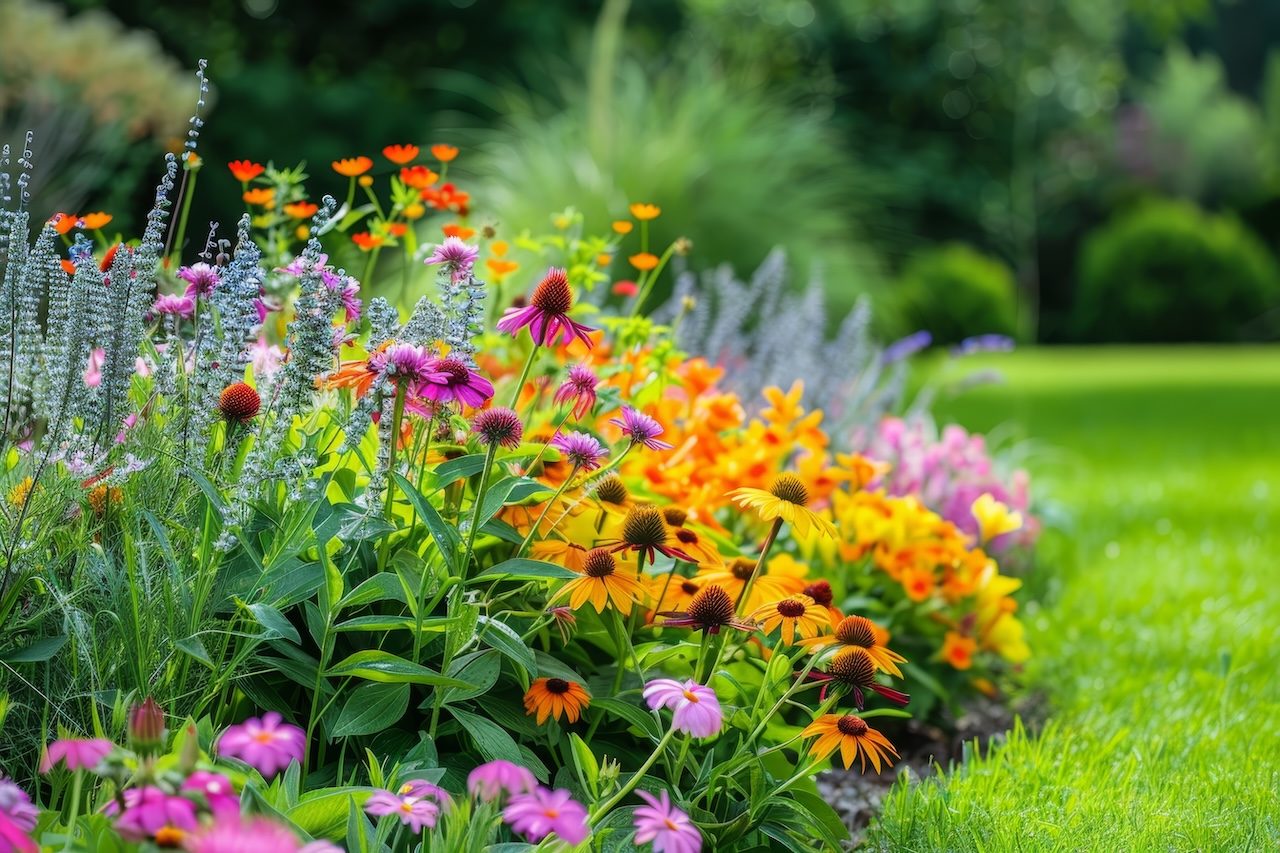
Very few single perennial species bloom continuously from April through October. The best strategy for spring-to-fall color is combining varieties with overlapping bloom windows.
Continuous bloom comes from layered plant selection
Succession planting achieves steady color:
- Early-season (April–May): creeping phlox, bleeding heart, candytuft
- Mid-season (June–July): coreopsis, salvia, catmint, daylilies
- Late-season (August–October): sedums, asters, Russian sage, black-eyed Susans
Add repeat bloomers—plants that flower twice if deadheaded—and you extend the show even further.
Common mistakes when shopping for long-blooming plants
- Buying based only on flower photos. That compact perennial in a gallon pot may sprawl to three feet wide in two years.
- Ignoring sun exposure. A shade-loving astilbe will limp along in full sun. A sun-loving coneflower planted under a tree will barely flower.
- Forgetting water needs. Mixing high-water perennials with drought-tolerant ones creates irrigation conflicts.
- Not checking mature spacing. Overcrowding leads to poor airflow, fungal issues, and plants competing for light.
| Bloom Season | Perennial Examples | Bloom Months | Sun Needs | Water Needs |
| Early | Bleeding Heart, Candytuft, Creeping Phlox | April–May | Part shade to sun | Moderate |
| Mid | Coreopsis, Salvia, Catmint, Daylily | June–July | Full sun | Low to moderate |
| Late | Sedum, Aster, Russian Sage, Rudbeckia | August–October | Full sun | Low |
Best Perennial Features to Look for Before You Buy
Bloom time and repeat blooming potential
Repeat bloomers like coreopsis, salvia, and catmint will rebloom if you deadhead before they set seed. Climate and cultivar selection also affect bloom length—newer hybrids are often bred for longer bloom windows.
Sun exposure, soil type, and drainage
Match the plant to the site. Full sun means 6+ hours of direct light. Part shade is 3–6 hours. Most perennials prefer loamy, well-draining soil. Clay-heavy soils hold moisture but drain slowly. Sandy soils drain fast but dry out quickly. Perennials sitting in waterlogged soil develop root rot.
Mature size and spacing
Proper spacing allows air circulation and reduces disease pressure. A perennial’s mature size is what it reaches after 2–3 years—not the size in the nursery pot.
Drought tolerance and water efficiency
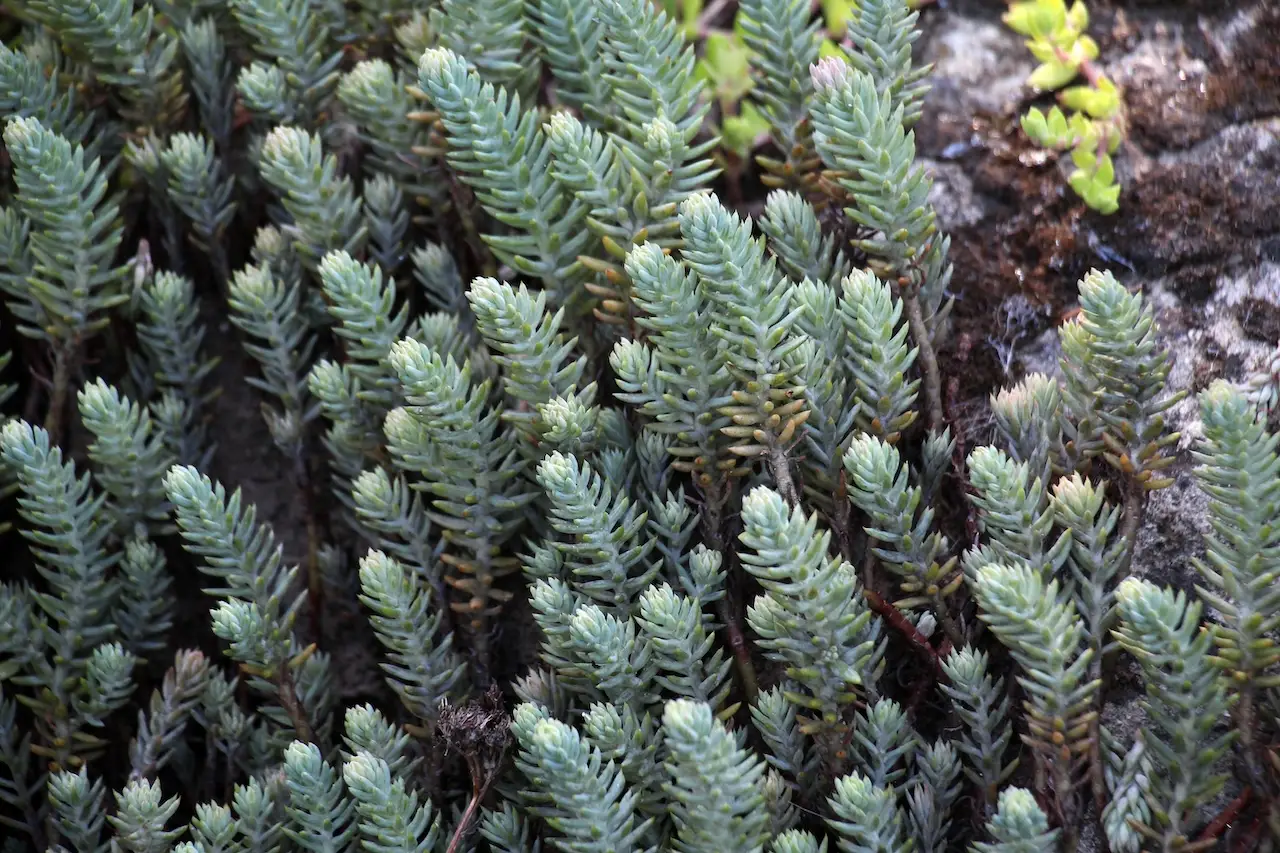
Southern Oregon’s dry summers make drought tolerance practical. Once established, low-water perennials like lavender, yarrow, Russian sage, and sedum thrive on minimal supplemental irrigation. High-water perennials (hostas, astilbes) require consistent moisture and are better suited to naturally damp areas.
Oregon-Specific Considerations When Buying Perennials
Climate patterns that affect perennial performance
- Wet springs, dry summers. Most of Oregon sees reliable spring rainfall followed by 2–4 months of little to no rain. Perennials need to establish during the wet season to survive summer without constant hand-watering.
- Temperature swings. Late frosts can damage early bloomers. Fall can arrive abruptly or stretch mild into November.
- Regional soil variation. Western valleys often have clay. Southern Oregon has more volcanic and rocky soils. Knowing your soil type helps you choose plants that thrive without heavy amendment.
Deer pressure in many Oregon neighborhoods
Suburban and semi-rural landscapes often see regular deer browsing. Deer-resistant perennials include lavender, salvia, yarrow, coreopsis, Russian sage, and catmint. Hostas, daylilies, and tulips are deer favorites.
Native and adapted plants worth considering
Oregon natives and well-adapted species require less maintenance and better resilience:
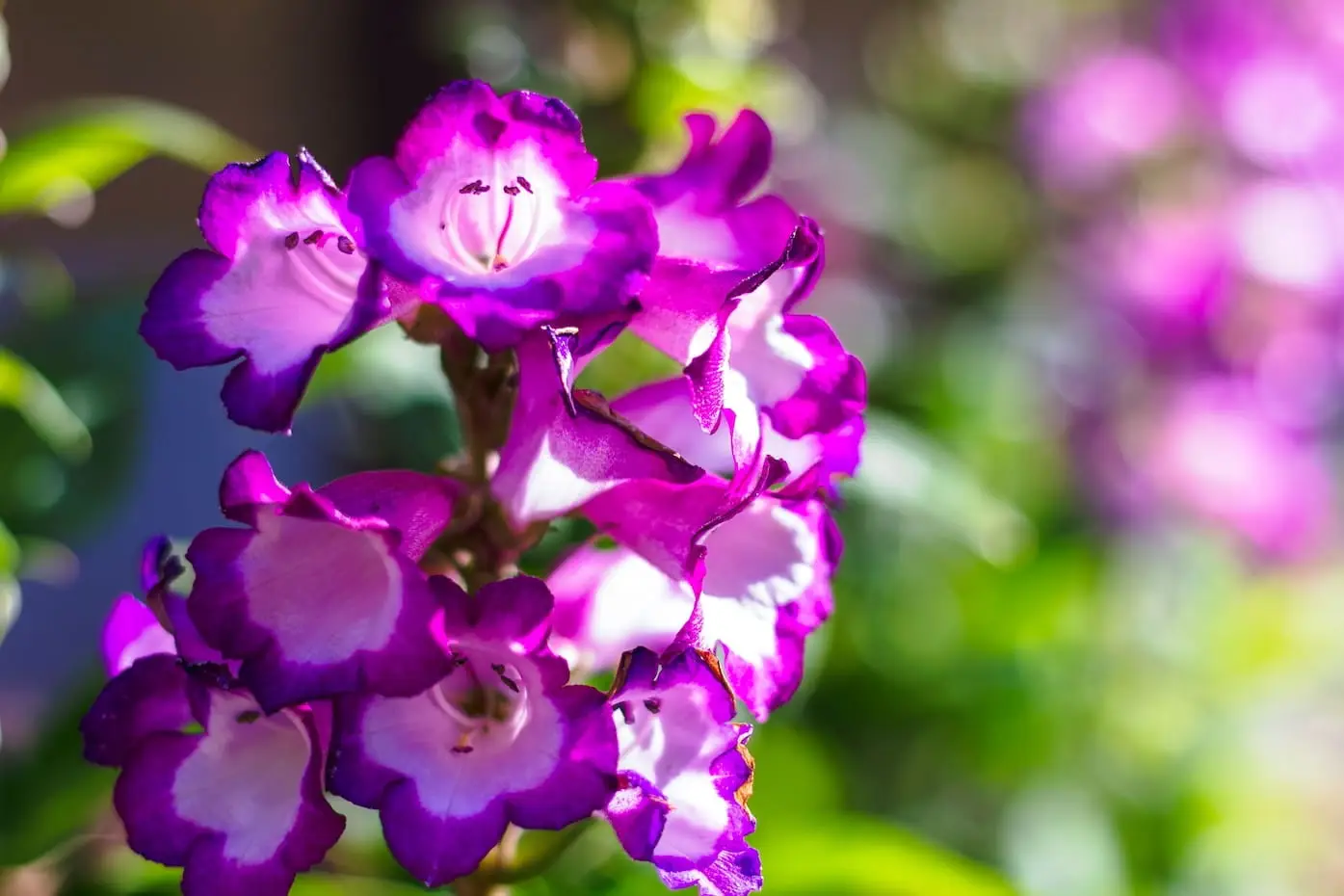
- Penstemon – drought-tolerant, pollinator-friendly, long bloom
- Eriophyllum lanatum (Oregon sunshine) – low-water, yellow blooms
- Sedum oreganum – succulent groundcover, late summer bloom
- Sisyrinchium (blue-eyed grass) – delicate spring blooms, naturalizes easily
Read More: Choosing Drought-Tolerant Plants for Oregon Summers
How Deer Proof Bulbs Fit Into a Low-Maintenance Planting Plan
Bulbs add seasonal bursts of color with minimal effort. In deer-prone areas, choosing the right bulbs means spring color without chewed-off blooms.
What “deer proof” really means
No plant is completely deer-proof, but certain bulbs contain compounds that taste bitter, so deer avoid them unless desperate. Daffodils, alliums, fritillaria, snowdrops, and hyacinths are consistently deer-resistant. Tulips and crocuses are deer candy.
Where bulbs work best in the landscape
- Along borders and pathways – early color at eye level
- Beneath deciduous trees – bulbs bloom before trees leaf out
- Around entryways – seasonal curb appeal
- Mixed into perennial beds – early color while perennials emerge
Plant bulbs in clusters of 5 to 15 for visual impact.
Pairing bulbs with long-blooming perennials
Daffodils and alliums bloom in early to mid-spring, then their foliage dies back as perennials like salvia and coreopsis start filling in. By June, the bulb foliage is gone and the perennials are in full growth—a seamless transition.
| Bulb Type | Bloom Season | Height | Sun Needs | Best Placement | Deer Resistance |
| Daffodil | Early to mid spring | 12-18″ | Sun to part shade | Borders, under trees | High |
| Allium | Late spring to early summer | 18-36″ | Full sun | Mixed beds, borders | High |
| Fritillaria | Mid-spring | 12-24″ | Sun to part shade | Rock gardens, borders | High |
| Snowdrop | Late winter to early spring | 4-6″ | Part shade | Under trees, pathways | High |
| Hyacinth | Mid-spring | 8-12″ | Full sun | Entryways, containers | Moderate to high |
Should You Mix Perennials With Artificial Turf?
Perennial beds and synthetic grass can work together, especially when natural lawn struggles or water conservation is a priority. The key is treating them as distinct zones with clear boundaries.
When artificial turf makes sense
- High-traffic areas – play zones, dog runs, side yards where grass dies from constant wear
- Difficult growing conditions – deep shade under trees, slopes, poor soil
- Low-water goals – eliminating irrigation zones where grass serves no functional purpose
It’s not a universal replacement for natural grass, but in targeted spots it reduces maintenance and water use.
Design tips for blending planting beds with turf
- Define clear edges. Use metal or plastic edging to separate turf from soil.
- Separate irrigation zones. Perennial beds need water; synthetic turf doesn’t. Run drip lines only to planted areas.
- Plan for drainage. Artificial turf needs a slight slope so water doesn’t pool. Planting beds should drain away from the turf.
Pros and cons of artificial turf options
- Appearance: Modern synthetic grass looks realistic with varied blade colors and textures.
- Heat retention: Artificial turf can be 30–50°F hotter than natural grass in summer, making it uncomfortable barefoot.
- Maintenance: No mowing or fertilizing, but you’ll need to rinse off dust and remove debris. Pet owners need to rinse and sanitize regularly.
- Installation quality: Professional installation matters. Expect to pay $8–$15 per square foot installed.
Questions to Ask Before Buying Perennials
How much sun does the planting area get?
Measure actual sun exposure over a full day. Full sun is 6+ hours; part shade is 3–6; shade is less than 3.
How often are you willing to water and deadhead?
Be honest. If you prefer low-effort landscapes, choose drought-tolerant, long-lived perennials that don’t require deadheading.
Do deer regularly enter the yard?
If yes, prioritize deer-resistant species and save yourself the frustration of replanting chewed-off perennials.
Are you trying to reduce lawn space?
Replacing turf with perennial beds cuts mowing and water use—but only if the beds are designed for low maintenance.
Do you want color all season or big seasonal bursts?
All-season color requires layered planting and more diversity. Seasonal bursts are simpler to plan and often lower maintenance.
When to Get Professional Help With Plant Selection
Signs your yard needs a full planting plan
- Drainage issues: Standing water or soggy soil affecting plant health
- Repeated deer damage: You’ve replanted the same beds multiple times
- Patchy lawn areas: Grass struggles and nothing has worked
- Poor bloom performance: Perennials underperforming year after year
- Inconsistent seasonal color: Great in June, dead by August
How M & B Landscaping Can Help Create a Balanced Landscape
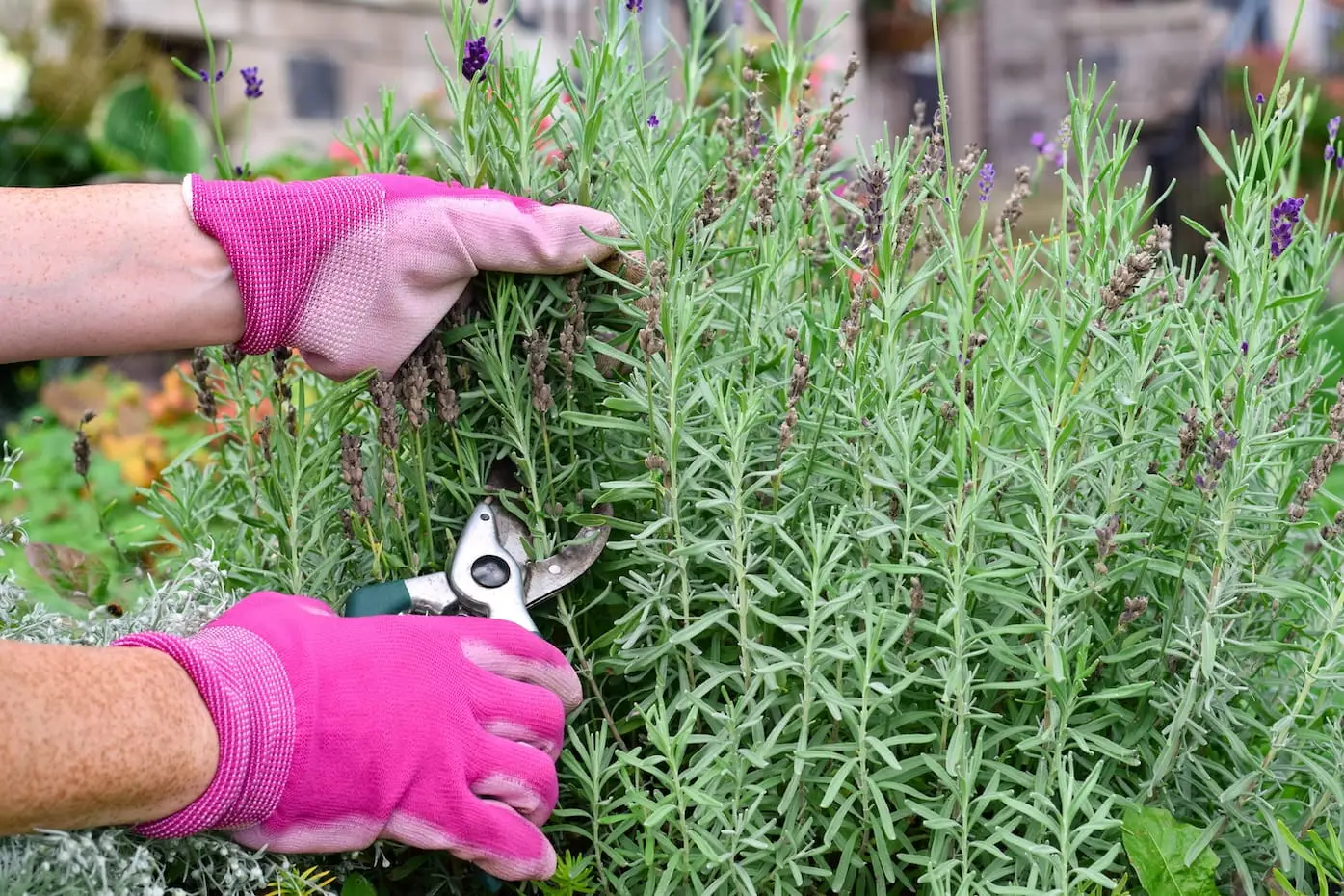
M & B Landscaping works with Southern Oregon homeowners to create planting plans that fit local conditions. We assess your site’s sun exposure, soil type, drainage, deer pressure, and irrigation setup before recommending plants. Then we layer bloom times, mix in deer-resistant bulbs, and integrate turf only where it makes functional sense.
Our services include site evaluation, custom plant selection for Oregon’s climate, design plans that balance color and maintenance, installation, and guidance on mixing perennials, bulbs, and turf zones.
Bottom line: Buy perennials for your site conditions, not just their appearance in a pot. Combine thoughtful bloom timing, deer-resistant plant choices, and practical turf decisions to create a landscape that thrives with less effort.
Ready to stop guessing and start with a real plan? Contact M & B Landscaping to schedule a planting consultation.