Many of the most costly paver mistakes happen long before installation day ever arrives. It’s easy to assume that choosing pavers is simply a matter of picking a color and a price point, but landscape paver selection involves far more than aesthetics.
Climate, intended use, drainage, safety, layout, and long-term maintenance all play a role in whether your project holds up — or becomes a source of regret. A wrong paver choice can lead to cracking, staining, slipping, or a patio that simply never looked the way you pictured it. Below, we break down the most common patio design errors homeowners make when selecting pavers, and how to avoid them before you ever place an order.
Why Choosing the Right Pavers Matters
Pavers do more than define the look of your outdoor space — they affect durability, safety, resale value, and how much upkeep your landscape will demand for years to come. A paver that looks stunning in a showroom can still fail if it’s used in the wrong location, installed in an unsuitable pattern, or paired with the wrong base and drainage plan. Choosing patio pavers isn’t just a design decision; it’s a functional one.
The Cost of a Wrong Paver Choice
Homeowners often fall in love with a showroom sample and forget to ask how that paver performs outside, under real weather and real foot traffic. The result can be costly: uneven surfaces that need to be reset, staining that won’t lift, fading from UV exposure, slippery footing near pools, or a finished product that visually clashes with the home. Repairing or replacing a patio after the fact is almost always more expensive than getting the selection right the first time.
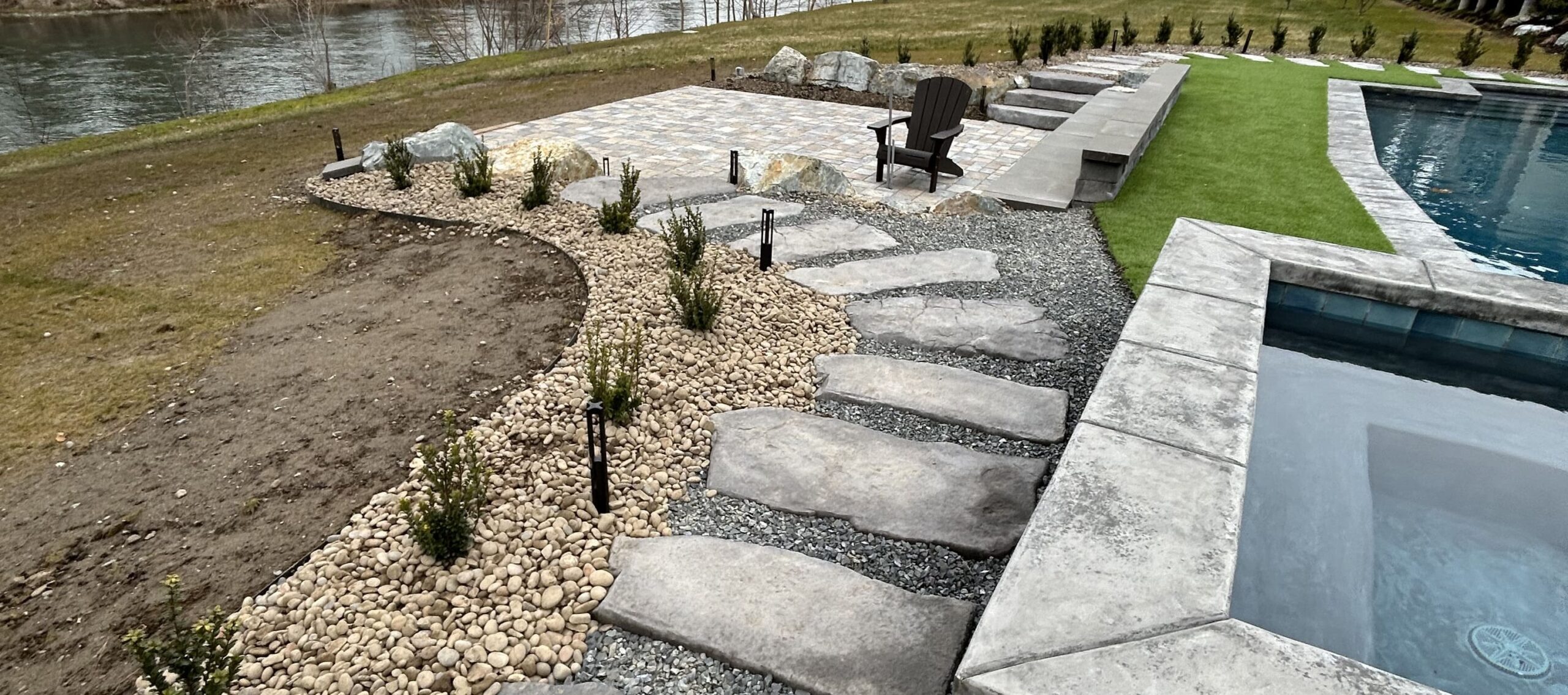
Design vs. Performance: Why You Need Both
The best paver for your project is one that fits the space both visually and functionally. A beautiful pattern that traps water, or a durable material that doesn’t suit your home’s style, both represent paver mistakes that could have been avoided with a bit more planning.
| Homeowner Goal | Common Mistake | Better Decision |
| A patio that looks elegant | Choosing color from a small catalog swatch | View large samples outdoors in real light |
| A driveway that lasts | Using patio-grade pavers for vehicle traffic | Select pavers rated for load-bearing use |
| A dry, usable backyard | Ignoring slope and drainage | Plan base, slope, and joint material together |
| A cohesive landscape | Picking pavers in isolation | Compare against siding, roof, and stone accents |
Mistake #1: Choosing Pavers Based on Looks Alone
It’s tempting to choose pavers purely because they looked appealing in a catalog, showroom, or online photo. But photos rarely capture texture, heat retention, true color variation, or how a paver performs through rain, freeze-thaw cycles, or years of heavy use. This is one of the most common paver color mistakes homeowners make.
Why Sample Boards Can Be Misleading
Lighting changes everything. A paver that looks warm and inviting under showroom lighting can look entirely different in direct sun, shade, or rain. Batch variation, wet-versus-dry appearance, and the surrounding palette of siding, stone veneer, mulch, grass, or pool water can all shift how a color reads in person. Before committing, request physical samples, view them outdoors at different times of day, and lay them next to your home’s existing materials.
Mistake #2: Ignoring the Purpose of the Space
Patios, driveways, walkways, pool decks, fire pit areas, and garden paths each come with different demands. Patio-grade materials aren’t always suitable for high-load driveway areas, and pool surfaces require textured, slip-resistant finishes that a patio paver may not offer.
Patio Pavers
Comfort, furniture stability, color harmony, and traffic flow should guide your choice for any seating or dining area.
Driveway Pavers
Driveways need adequate thickness, a proper load rating, secure edge restraint, and long-term durability under vehicle weight.
Pool Deck Pavers
Slip resistance, heat retention, barefoot comfort, and efficient drainage are essential around pool decks.
Walkway and Garden Path Pavers
Scale, spacing, and accessibility matter here, since these walkway pavers guide movement and should feel proportionate to the landscape around them.
| Project Area | Must-Have Features | Paver Mistakes to Avoid |
| Patio | Comfort, color harmony, even surface | Choosing decorative-only materials |
| Driveway | Load rating, thickness, edge restraint | Using thin, patio-grade pavers |
| Pool Deck | Slip resistance, low heat retention | Glossy or dark, heat-absorbing finishes |
| Walkway/Garden Path | Scale, spacing, accessibility | Oversized pavers in a narrow path |
Mistake #3: Forgetting About Climate and Weather
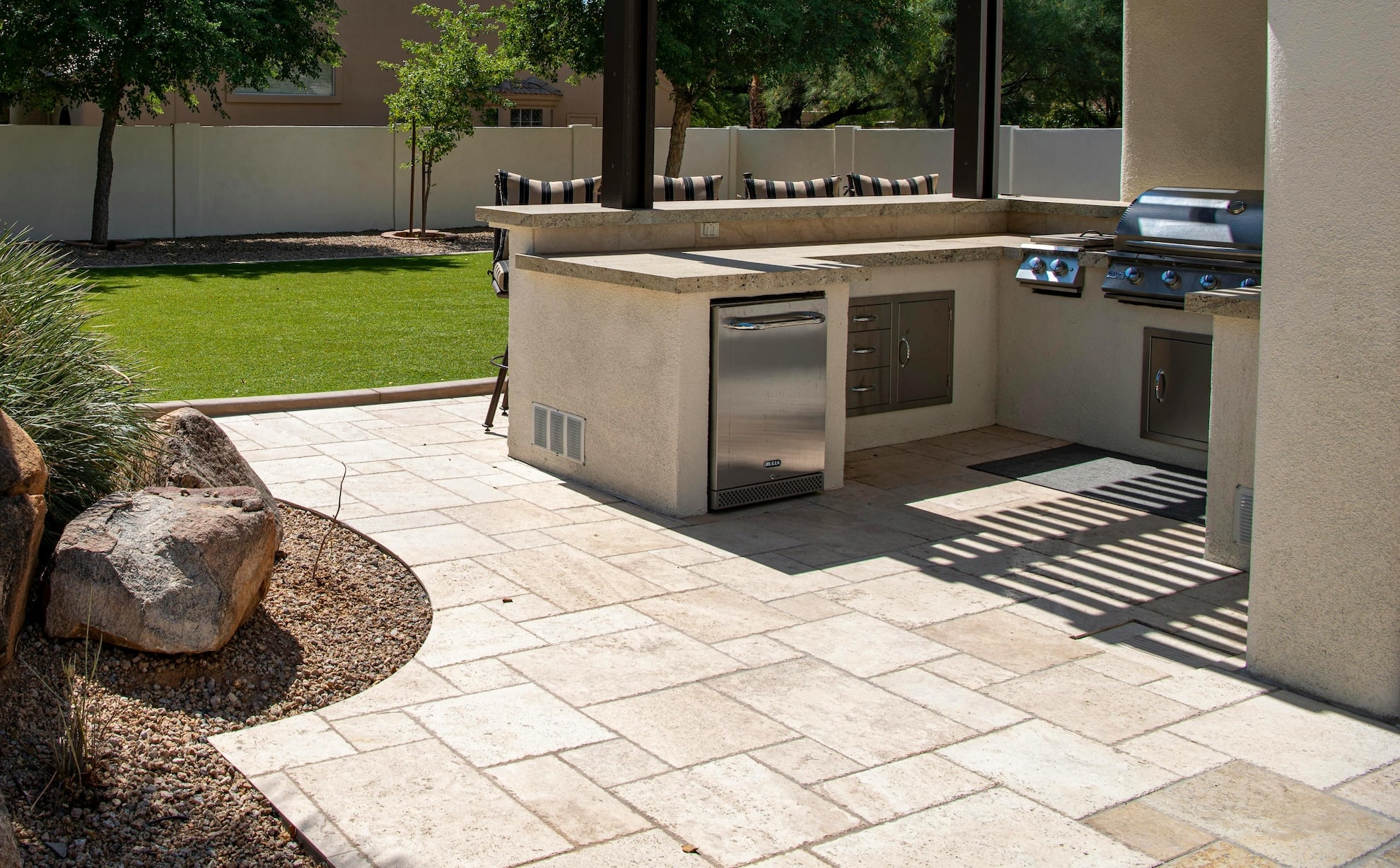
Sun exposure, heavy rain, snow, freeze-thaw cycles, humidity, salt, and heat all influence how a paver performs over time. Climate and heat retention are major factors that are too often left out of the decision-making process.
Hot Climates
Lighter colors and heat-reflective materials help keep surfaces comfortable underfoot in warm regions.
Cold or Freeze-Thaw Climates
Water absorption rates, cracking risk, a properly engineered base, and reliable drainage all matter when temperatures swing below freezing.
Rainy or Poor-Drainage Areas
Permeable pavers can help, but they are not a stand-alone fix — correct site planning is still required for them to function properly.
Mistake #4: Overlooking Drainage Before Selecting Pavers
Drainage shouldn’t be an afterthought handled during installation; it should influence the paver type, base design, slope, and jointing material from the start. Permeable systems are not automatically a complete drainage solution — they still require soil evaluation, overflow planning, and a properly engineered base. Watch for warning signs like pooling water, soggy lawn areas, soil erosion, or water flowing toward the house, and make sure water is directed away from foundations, outdoor kitchens, stairs, and seating areas. M & B Landscaping regularly evaluates these site conditions before recommending a paver system, since drainage problems caught early are far easier to solve than those discovered after installation.
Traditional vs. Permeable Pavers
Traditional pavers rely on slope and surface runoff, while permeable pavers allow water to filter through jointing material into the base below. Each has its place, but permeable systems require compatible base materials and joint fill to work as intended — they aren’t simply a drop-in upgrade.
A simple way to visualize this is a patio sloped gently away from the home’s foundation, guiding water toward a planted area or drain rather than back toward the house.
Mistake #5: Picking the Wrong Color
Color mistakes are among the most visible patio design errors, and getting this wrong is a classic example of a wrong paver choice. Some colors clash with the home, absorb excess heat, show stains easily, or simply look different once installed than they did in the showroom. Even pavers ordered in the same color, size, and manufacturer can appear different due to batch, production date, age, or weathering. Consider your roof color, siding, stone accents, and overall landscape style before finalizing a choice — and remember that pavers often look darker when wet and can read warmer or cooler depending on the lighting around them.
Mistake #6: Mixing Too Many Colors, Shapes, or Patterns
Too many design elements in one space can make a landscape feel busy, disjointed, or visually smaller than it is. Mixing too many colors, shapes, and textures is a frequent outdoor design mistake that disrupts visual flow. Borders, inlays, and accent pavers can still define zones effectively, but only when used intentionally with deliberate contrast — not as a way to combine every option available.
How to Create a Cohesive Palette
Aim for one dominant paver, one accent material, and a limited, complementary color range. This keeps the eye moving smoothly through the space instead of jumping between competing focal points.
Mistake #7: Choosing a Pattern Without Thinking About Scale
Layout affects the perceived size, formality, and movement of a space. Large-format pavers often suit modern patios, while smaller modular pavers tend to work better for curved layouts or traditional designs. Watch out for overly tight patterns, high-contrast borders, and an excessive number of cuts, all of which can make a finished project look chaotic. Borders, soldier courses, and edge restraints help tie a layout together and give it a finished appearance.
| Style | Recommended Pattern | Best Paver Size | Where to Use It |
| Modern | Running bond, large-format | Large-format | Open patios, pool decks |
| Traditional | Herringbone | Medium modular | Driveways, formal patios |
| Rustic | Random/modular mix | Varied | Garden paths, fire pit areas |
| Formal | Basket weave | Uniform | Entryways, courtyards |
| Mediterranean | Herringbone with border | Medium to large | Patios, walkways |
Mistake #8: Ignoring Furniture, Foot Traffic, and Outdoor Living Zones
Outdoor spaces need enough room for seating, dining tables, planters, and circulation; overcrowding makes an area difficult to actually use, which is one of the more overlooked patio design errors. Before finalizing paver size and pattern, map out dining sets, lounge chairs, grills, planters, and fire features. Leave enough room around furniture and between zones so the space feels open rather than cramped, and remember that a patio should look good from inside the home as well as from the yard.
Read More: How to Design a Fire Pit Area in Your Backyard

Mistake #9: Choosing Slippery or Uncomfortable Surfaces
Smooth, polished, or glossy pavers can become genuinely unsafe in wet conditions. Texture, grip, barefoot comfort, and accessible walking surfaces should all factor into your decision, particularly near pools, hot tubs, or kitchens where wet feet, grease, and spills are common. Heat retention is also worth considering alongside surface texture.
Accessibility Considerations
Smooth transitions, stable footing, and avoiding overly uneven stones in high-traffic areas all support safer, more accessible outdoor spaces for everyone who uses them.
Mistake #10: Forgetting About Maintenance
Every paver material comes with its own maintenance needs — some require sealing, stain removal, joint sand replenishment, weed prevention, or regular cleaning. Porous materials can absorb water and stains if they aren’t sealed properly, and joint material — whether sand, polymeric sand, or permeable-compatible fill — needs to match the paver system. Leaves, mulch stains, rust, pool chemicals, efflorescence, and organic debris can all affect long-term appearance.
| Material | Sealing Needs | Stain Resistance | Cleaning Difficulty | Best Use |
| Concrete Pavers | Recommended every 2–3 years | Moderate | Easy to moderate | Patios, driveways |
| Natural Stone Pavers | Often required | Lower (porous) | Moderate to difficult | Patios, pool decks |
| Porcelain Pavers | Rarely needed | High | Easy | Patios, pool decks |
| Permeable Pavers | System-dependent | Moderate | Moderate | Drainage-focused areas |
Mistake #11: Not Planning the Base and Installation Requirements Early
Although this article focuses on choosing pavers, the paver you select directly affects excavation depth, base type, bedding material, compaction, and installation method. Insufficient base preparation is one of the most common causes of long-term issues like sinking, shifting, or cracking — and the right base looks different for a patio than it does for a driveway or pool deck.
Why Soil Conditions Matter
Clay soil, sandy soil, poor drainage, and freeze-thaw exposure all influence how a base should be engineered for your specific site.
DIY vs. Professional Installation
Smaller walkways or garden beds may be reasonable DIY projects, but driveways, pool decks, and larger patios often benefit from professional installation to ensure proper base preparation and long-term stability. A team like M & B Landscaping can evaluate your soil conditions, drainage needs, and paver selection together, so the base is engineered correctly the first time instead of being corrected after the fact.

Mistake #12: Buying Without Checking Batch Variation and Availability
Paver colors can vary between production batches, which becomes especially important when extending an existing patio, repairing a small area, or ordering in phases.
Why New Pavers May Not Match Old Pavers
Sun exposure, weathering, age, and dye-lot variation can all cause newly installed pavers to look noticeably different from an existing installation, even when the product name is identical.
How to Avoid a Mismatch
Order enough material for the full project up front, inspect pallets before installation, and blend pavers from multiple pallets rather than installing one bundle at a time — pulling from a single bundle can create visible patches of color variation. It’s also wise to save a few extra pavers for future repairs.
Final Thoughts: Avoid Paver Mistakes by Planning Before You Buy
The best paver choice balances beauty, safety, durability, drainage, and maintenance — not just first impressions. Avoiding paver mistakes starts with planning before you buy: understanding your climate, the purpose of the space, your soil and drainage conditions, and the long-term upkeep you’re willing to take on. A wrong paver choice or a string of patio design errors can usually be traced back to skipping one of these steps. If you’re unsure where to start, M & B Landscapingoffers landscape consultations, paver sample requests, and professional site assessments to help you choose the right material before you ever place an order.
FAQs About Pavers
What is the most common mistake when choosing pavers? The most common mistake is choosing pavers based on appearance alone, without considering how they’ll perform given the space’s use, local climate, drainage needs, and long-term maintenance demands.
Read More: Pavers vs Concrete Patio: 5 Steps to Choosing the Best Material for Your Backyard
How do I know if I made the wrong paver choice? Signs of a wrong paver choice include slipping or poor traction, cracking, noticeable color mismatch, persistent staining, uncomfortable heat retention underfoot, pooling water, or a finished look that doesn’t suit the home.
Should patio pavers match the house exactly? Not necessarily. Pavers should coordinate with your home’s siding, roofline, and stone accents rather than match them exactly — a complementary palette usually looks more intentional than an identical one.
What paver color is best for hot climates? Lighter colors and heat-conscious materials are generally recommended in hot climates, since they stay cooler underfoot and reduce heat retention.
Are permeable pavers always better? No. Permeable pavers are valuable for drainage-focused projects, but they still require proper soil conditions, base design, and overflow planning to perform well — they aren’t a universal upgrade.
How can I avoid paver color mismatch? Request physical samples, check for batch or dye-lot variation, blend pavers from multiple pallets during installation, and order extra material upfront for future repairs.