Sod gives you a finished lawn in a single day, but the roots underneath still need a few weeks to grab hold. When you lay it decides how easy those weeks are. Get the timing right and new sod knits into the soil with little fuss. Get it wrong and you spend the summer fighting brown seams and dry edges.
In Southern Oregon, the short answer is simple: early fall is the best time to lay sod, and spring is a strong second. Summer works if you can water heavily, and winter is usually a bad bet. Below, you’ll find a month-by-month guide, the grass we recommend most, and a simple watering plan for the first month.
Why Timing Matters for New Sod
Our lawns are cool-season grasses. They grow hardest when air temperatures sit in the 60s and 70s and the soil is still warm. That’s when new roots push down into the soil fastest.
Local weather pulls in two directions. Summers are hot and dry, with July and August highs around 90°F in Grants Pass. Winters are cool and wet, with December alone averaging about 8 inches of rain. Heavy clay soils hold that winter water and stay soggy for weeks.
That means your two biggest threats are:
- Summer heat stress — sod dries out from the edges in before the roots can reach moisture below.
- Winter waterlogging — cold, saturated soil slows root growth and invites disease.
The best windows fall between those two extremes.
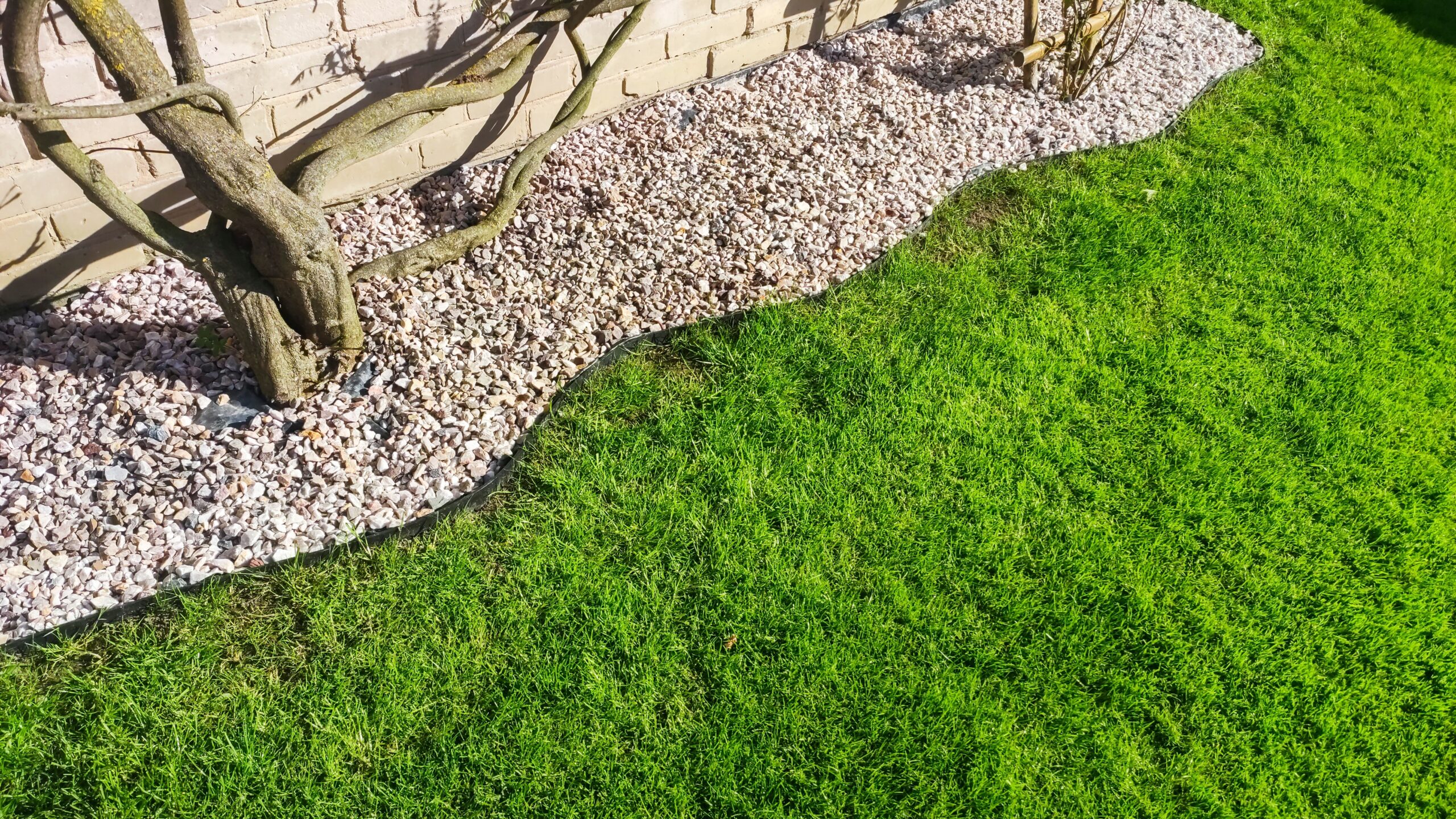
Best Time to Lay Sod in Oregon: Month-by-Month
Use this chart to plan your project. “Ideal” means sod roots quickly with normal care. “With care” means it will work, but you need to water closely and watch the weather.
| Month | Rating | What to Expect |
| January–February | Avoid | Cold, saturated soil; roots barely grow |
| March | With care | Soil still cool and often wet; frost risk |
| April | Ideal (late month) | Growth picking up; mild temps |
| May | Ideal | Fast root growth; rain tapering off |
| June | Good | Warm but manageable; start irrigation |
| July–August | With care | 90°F highs; water daily, sometimes twice |
| September | Ideal | Warm soil, cooling air; best rooting |
| October | Ideal (early to mid) | Fall rains help; finish before soil cools |
| November | With care | Short days, cold soil; slow rooting |
| December | Avoid | Wettest month; soil often waterlogged |
Fall: The Top Choice
Mid-September through mid-October is the sweet spot. The soil still holds summer warmth, so roots grow fast. Meanwhile, cooler air means the grass blades lose less water, and fall rains start to do some of the watering for you.
Fall sod also gets a full cool season to root in before it faces its first summer. By the time July heat arrives, the roots are deep enough to handle it. Try to finish by mid-October so the lawn is well anchored before cold, wet weather sets in.
Spring: A Strong Second
Late April through early June is the next best window. The grass is waking up and growing quickly, and mild temperatures keep stress low.
The tradeoff is time. Spring sod has only a few weeks before summer heat arrives, so you’ll need to keep up with watering through its first summer. Avoid laying sod on soil that’s still soggy from winter rain, since working wet clay compacts it and slows root growth.
Summer and Winter: Only With a Plan
Summer sod can work if you have a reliable irrigation system and can water daily. Expect to water twice a day during heat waves, and plan your install for a cooler week if you can.
Winter sod is rarely worth it here. Cold, saturated soil means the roots sit idle, and tall fescue in particular is prone to leaf spot and patch diseases during its first winter. If you’re planning a lawn in November, it’s usually smarter to prep the site now and lay sod in spring.
Why We Recommend Tall Fescue Sod
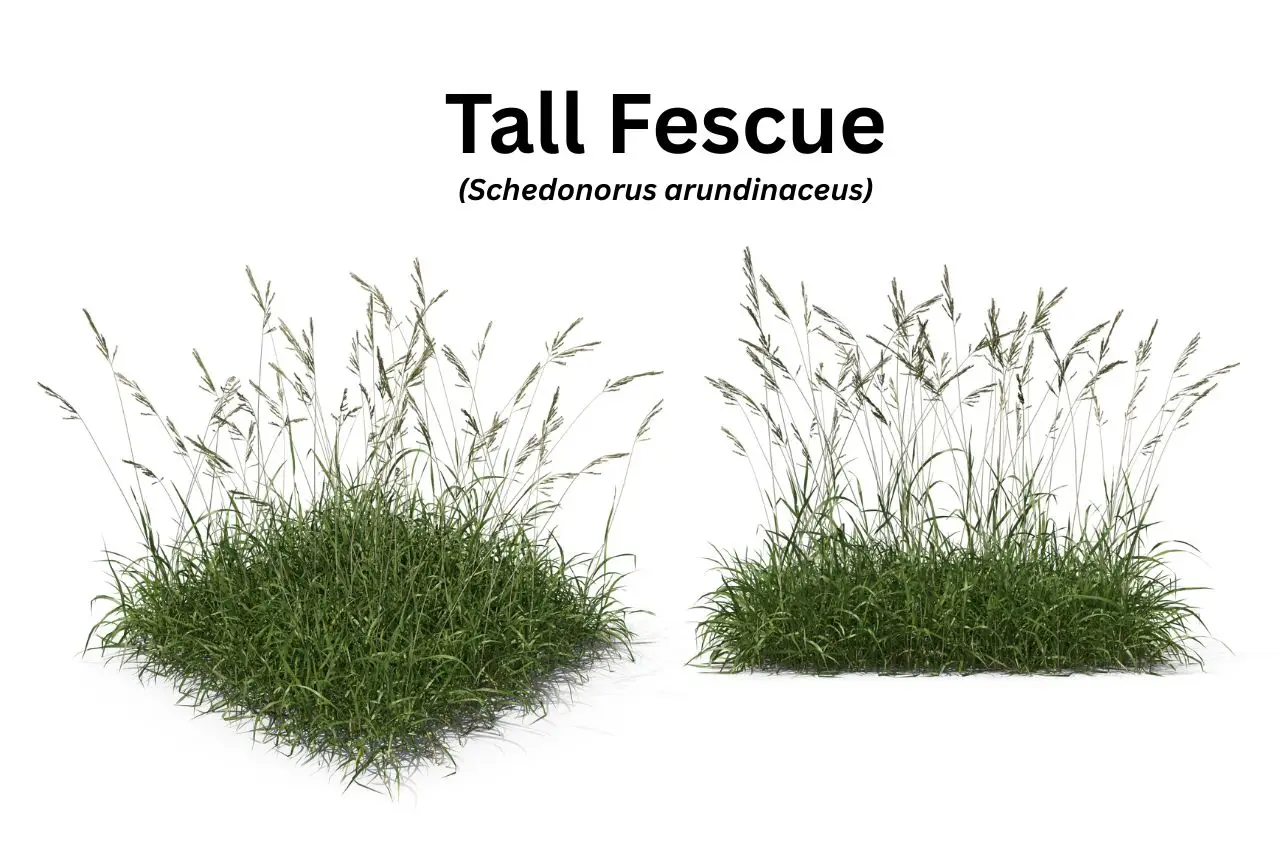
If you want one grass that handles hot, dry summers and still looks good, tall fescue is our top pick. Tall fescue grows well in all areas of the state and needs the least water of the common lawn grasses.
Here’s why it fits local yards so well:
- Deep roots. Tall fescue roots go deeper than most cool-season grasses, so it can pull water from lower in the soil during dry spells.
- Lower water needs. In OSU research, tall fescue stayed green with the least irrigation of any species tested. In summer, watering about twice a week with ¼–½ inch per session is often enough once it’s established.
- Heat tolerance. It’s adapted to warm weather and holds its color through summer better than ryegrass or fine fescue.
- Sun and partial shade. It thrives in full sun and tolerates moderate shade.
- Low fertility needs. It does well without heavy fertilizer programs.
There are a few tradeoffs to know about. Tall fescue has a coarser blade than ryegrass or bluegrass, though modern turf-type varieties are much finer than older pasture types. It also grows in clumps rather than spreading, so bare spots don’t fill in on their own. Many sod farms blend in a small amount of Kentucky bluegrass to help with repair.
Mowing tip: Keep tall fescue at 3 to 4 inches. Taller grass shades the soil, keeps roots deeper, and crowds out weeds.
Other Top Grasses for Sod
Tall fescue isn’t the only option. Depending on your shade, traffic, and how much you want to water, one of these may fit better.
Perennial Ryegrass
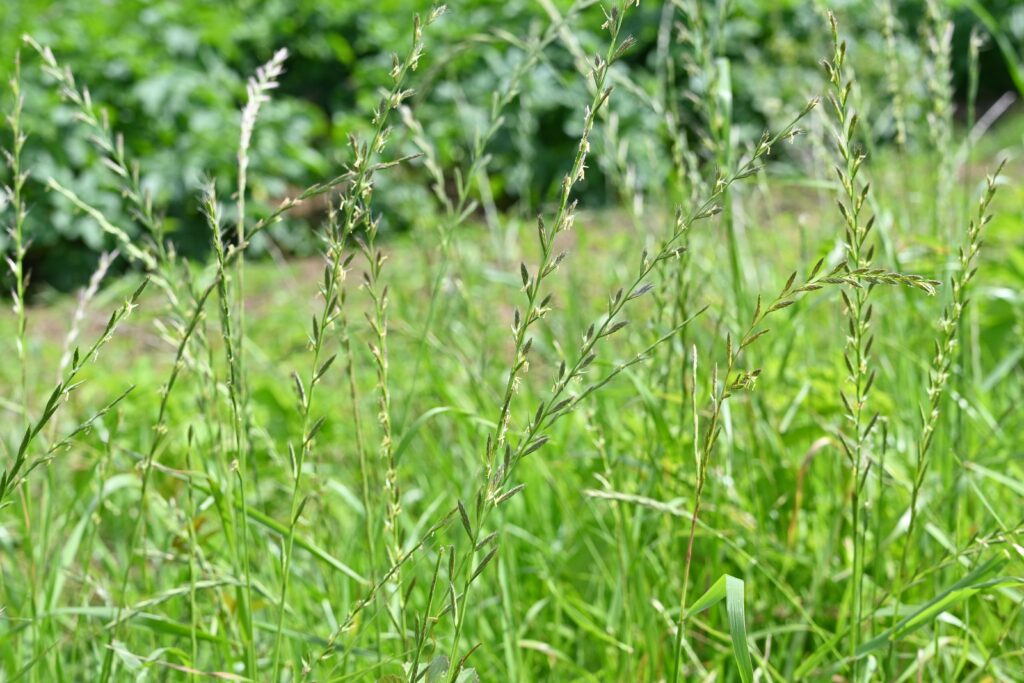
Perennial ryegrass is a common lawn grass west of the Cascades. It roots fast, has a fine blade, and gives you a dark green lawn. It’s a good pick for high-traffic yards and quick results.
The downside is water. Pure ryegrass lawns turn brown in drought and heat, so plan on watering every two to four days in summer. Mow at 2 to 3 inches.
Fine Fescue
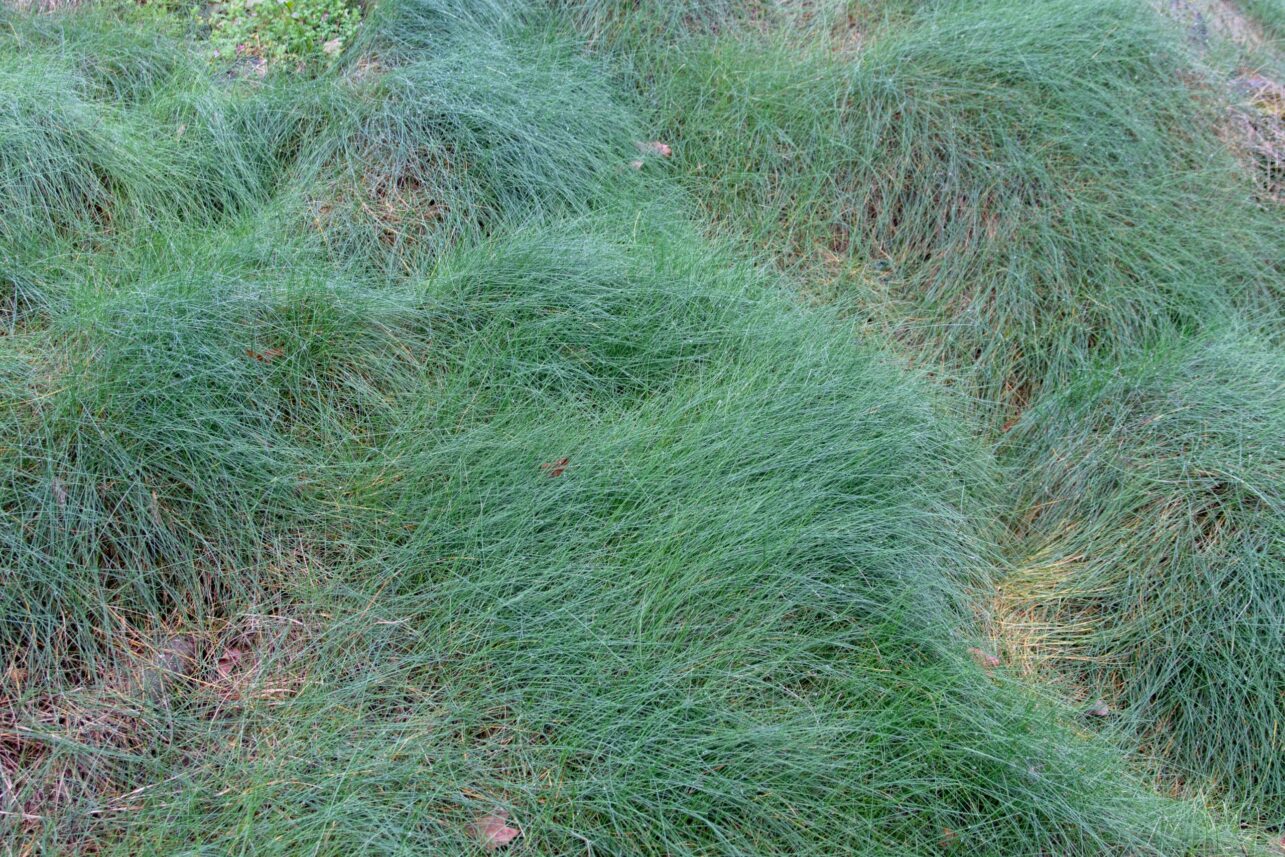
Fine fescues (creeping red, Chewings, and hard fescue) are the shade specialists. They handle low fertility and partial shade under trees better than other grasses. They’re often blended with ryegrass for faster establishment.
They do need frequent water in summer to stay green, and they can develop fungal problems in wet, shady spots. Fine fescue works best in shade with decent airflow and well-drained soil.
Kentucky Bluegrass
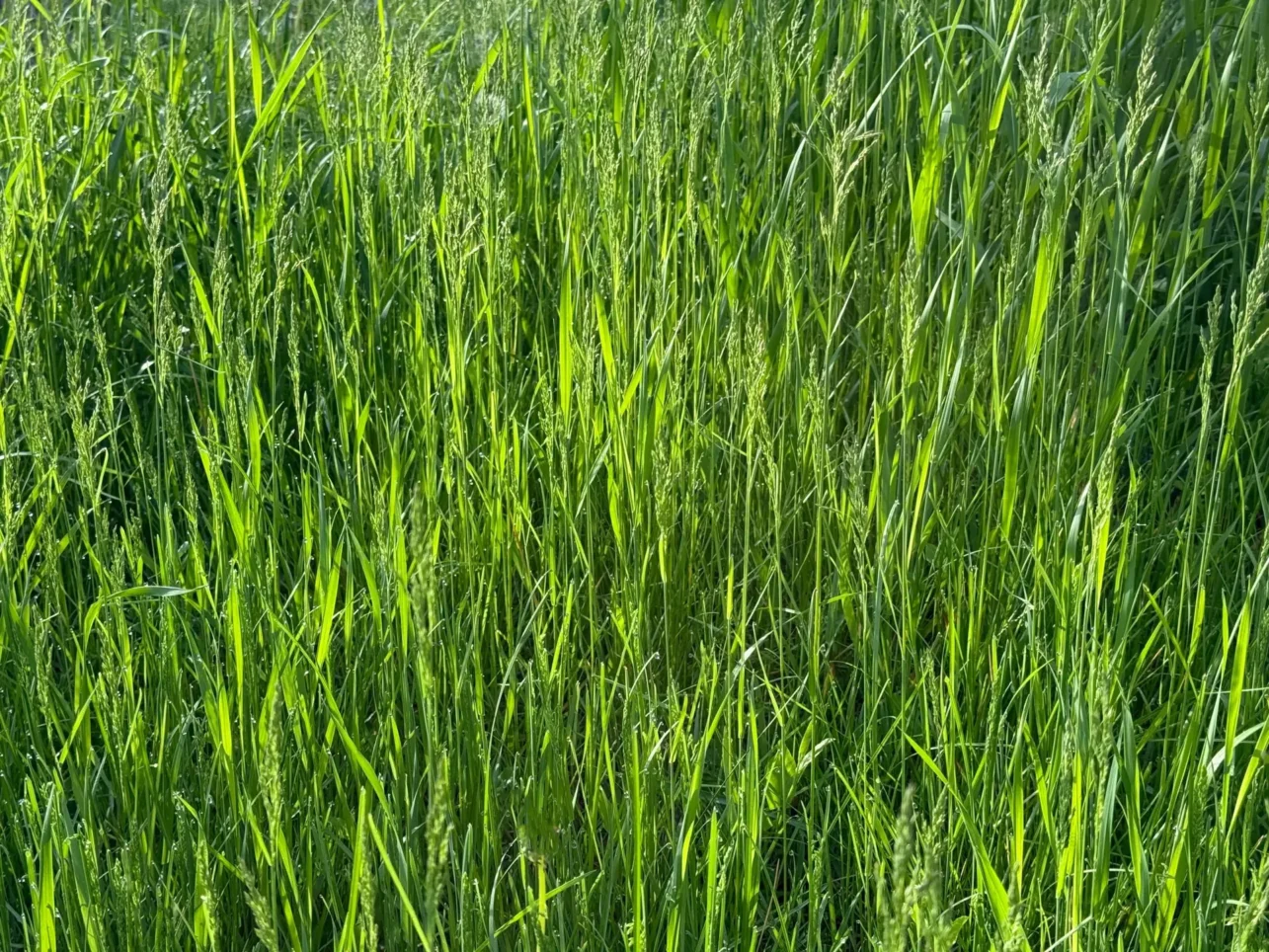
Kentucky bluegrass spreads by underground stems called rhizomes, so it repairs itself well after heavy foot traffic. It gives a lush, soft lawn when fed and watered regularly.
However, it struggles with cool-weather diseases on the western side of Oregon and rarely lasts as the main grass. It works best as a small part of a tall fescue or ryegrass blend.
Top Grasses for Sod Compared
| Grass | Summer Water Need | Shade Tolerance | Traffic Recovery | Mowing Height | Best For |
| Tall fescue | Low | Moderate | Fair | 3–4 in. | Sunny yards, water savings |
| Perennial ryegrass | Medium–high | Low–moderate | Good | 2–3 in. | Fast, fine-bladed lawns |
| Fine fescue | High (to stay green) | High | Fair | 2–3 in. | Shady areas |
| Kentucky bluegrass | High | Low | Excellent | 2–3 in. | Blends, high-traffic areas |
How to Prepare Your Yard Before Sod Arrives
Good timing won’t save sod laid on poor soil. Have the site ready before delivery, because sod should go down the same day it arrives.
- Clear the area. Remove old grass, weeds, rocks, and roots so sod sits on bare soil.
- Loosen the soil. Till 4 to 6 inches deep. With heavy clay, mixing in compost or topsoil helps roots spread and water drain.
- Grade for drainage. Slope soil away from your house and fill low spots where water pools. If water already stands in your yard after rain, a French drain may need to be installed before any new lawn goes in.
- Set the final grade. Rake the soil smooth and leave it about 1 inch below sidewalks, driveways, and patios so the sod sits flush.
- Add starter fertilizer. Rake a starter fertilizer lightly into the top layer to feed new roots.
- Roll and moisten. Firm the soil with a lawn roller, then water a day or two before install. Soil should be moist, not muddy. Never lay sod on dry dirt.
When laying, start along a straight edge like a driveway, push pieces tightly together, and stagger the seams like brickwork. Gaps and overlaps are where edges dry out first.
Watering New Sod: The First Month
Watering is where most new lawns succeed or fail. Start watering each section right after it’s laid, not at the end of the day.
| Timeframe | How Often | How Much | Goal |
| Day 1 | Right after install | Soak soil 3–4 in. deep | Bond sod to soil |
| Days 2–14 | Daily (twice on hot/windy days) | Keep sod and soil moist | Start root growth |
| Weeks 3–4 | Every 2–3 days | Deeper, less frequent | Push roots down |
| After 1 month | 2–3 times per week | 1–2.5 in. per week in summer | Build drought tolerance |
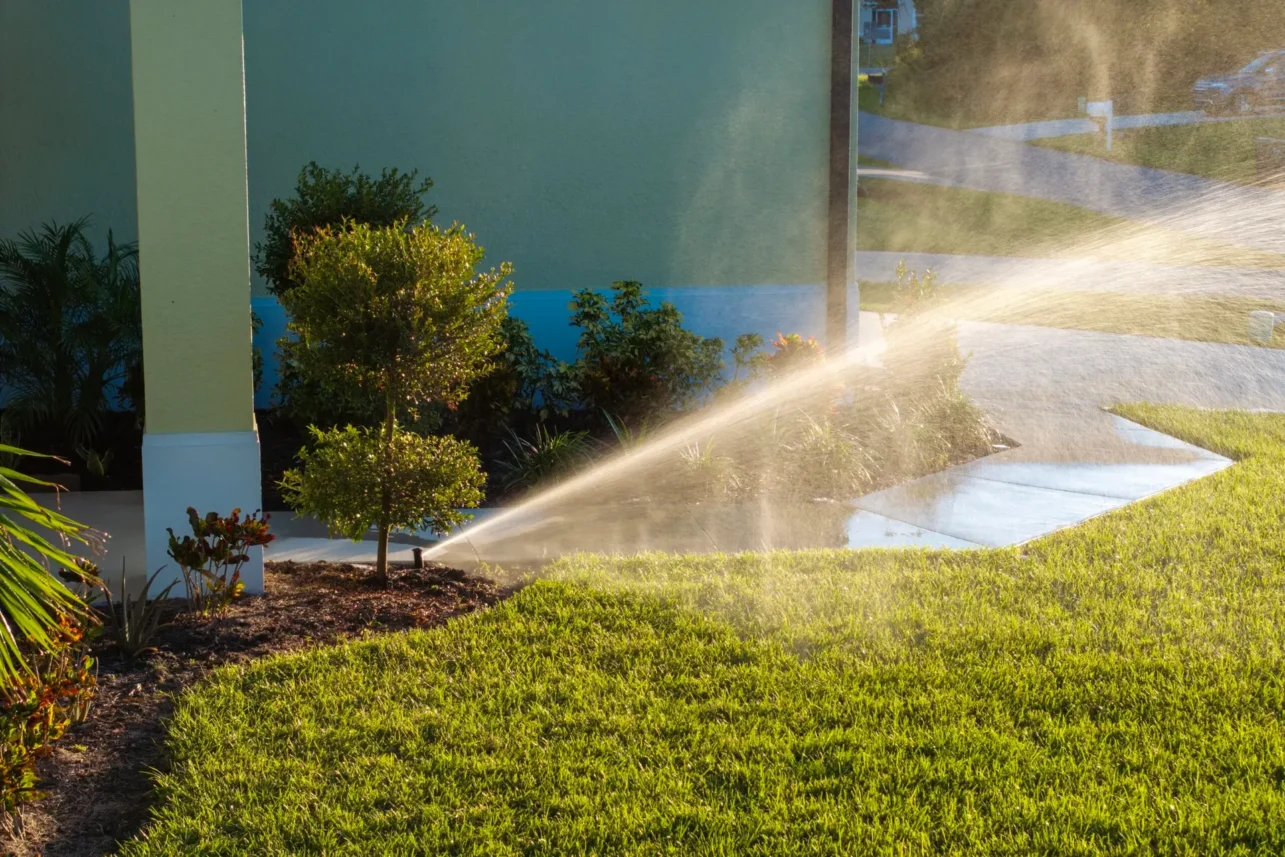
A few rules make a big difference:
- Water early in the morning. Less wind and cooler temps mean less waste, and blades dry off quickly to prevent disease.
- Use sprinklers, not a hand hose. Hand watering misses edges and corners. Properly adjusted in-ground sprinkler systems give even coverage over the entire lawn.
- Do the tug test. Gently lift a corner after 10 to 14 days. If it resists, roots are taking hold and you can start spacing out watering.
- Water shady areas less. They dry slower and are more prone to fungus.
Hold off on the first mow until about two weeks after install, once the sod is rooted. Use a walk-behind mower, never cut more than one-third of the blade, and keep tall fescue at 3 inches or higher.
Common Sod Mistakes to Avoid
- Laying sod in July heat without a reliable way to water daily.
- Letting pallets sit in the sun for a day or more before installation.
- Skipping soil prep and laying sod over compacted clay or old turf.
- Shallow, frequent watering after the first two weeks, which keeps roots near the surface.
- Walking on new sod too soon. Keep foot traffic light for the first few weeks.
- Choosing the wrong grass for your shade and water situation.
If you’re weighing a lawn against low-water options, our guide on artificial turf vs. real grass can help.
When to Get Professional Help
DIY sod can work on a small, flat yard. Call a professional when you see any of these signs:
- Standing water or soggy spots that linger more than a day after rain.
- Heavy clay or rocky soil that’s hard to dig or drains poorly.
- Slopes or uneven grades that send water toward your home.
- A failed past lawn, such as sod that browned out, lifted at the seams, or never rooted.
- No irrigation system, or one with dry spots and uneven coverage.
- Large areas where getting all the sod down on delivery day isn’t realistic.
These problems are much easier to fix before sod goes down than after.
Get a Healthy New Lawn With M & B Landscaping
M & B Landscaping installs sod lawns built to last through hot summers and wet winters. Our team handles the full project, from soil to first watering:
- Sod installation with site prep, grading, premium sod selection, and rolling
- Irrigation and drainage solutions, including sprinkler installation and French drains
- Lawn maintenance to keep your new grass mowed, fed, and healthy
The bottom line: lay your sod in early fall or late spring, choose a grass like tall fescue that fits your yard, and water deeply while it roots.
Serving homeowners in Grants Pass and Josephine County, we offer free estimates and Spanish-speaking service. Schedule your sod installation consultation today.